
Every Name Has a Story.
Every Student Can Help Tell It.

Faces to Names makes remembrance meaningful and relevant through a real-world
student research experience.
Students investigate the people behind names on local memorials, evaluate evidence, uncover connections to their community, and create accurate Person Profiles and Community Profiles.
Through this work, they develop critical-thinking, historical-research, and digital-literacy skills while contributing to remembrance that is personal, participatory, and rooted in community.
Teachers participating today are helping shape the future of remembrance education in Canada.
Why teachers choose Faces to Names
Students work with primary and secondary sources, including Library and Archives Canada, the Canadian Virtual War Memorial, and Commonwealth War Graves Commission records. Along the way, they develop historical thinking, research, source evaluation, and digital literacy skills while learning how to verify information and identify and resolve discrepancies across records.
❋ Real Historical Research
Ready-to-use materials, structured Case Files, and guided research tools make implementation straightforward, with flexibility to fit different teaching styles, schedules, and learning environments. The project aligns naturally with Grade 10 Canadian History in Ontario and equivalent secondary school history and social studies courses across Canada. Faces to Names supports cross-curricular learning by connecting history with geography, language arts, digital literacy, and citizenship education.
No course redesign required.
❋ Designed for Real Classrooms
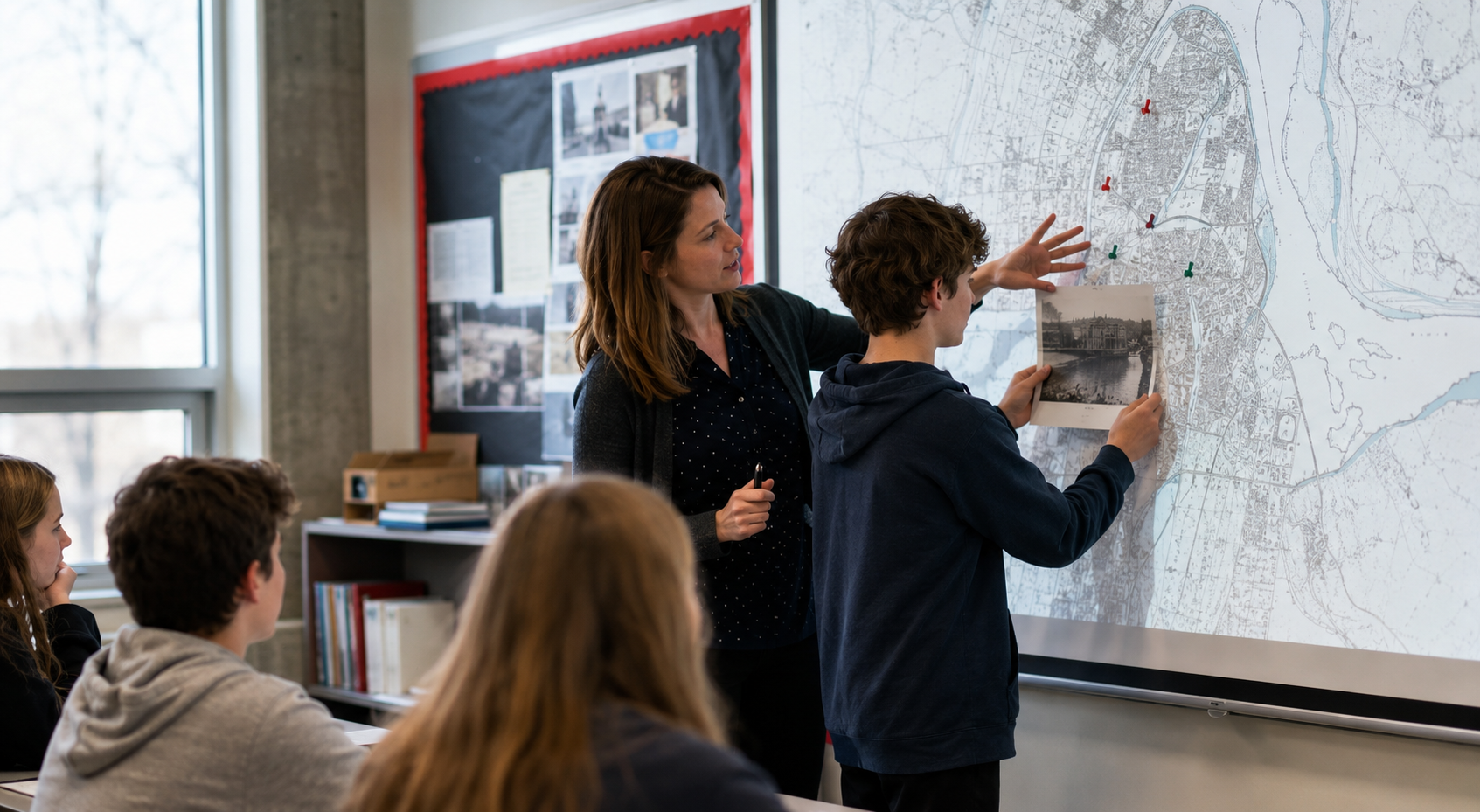
Students explore the families, schools, workplaces, neighbourhoods, and communities connected to the people they research. Through geographic mapping, community exploration, and the discovery of local connections, memorials, and tributes, they gain a deeper understanding of how war shaped the places they know today while developing a greater appreciation for peace, freedom, remembrance, and their role in carrying these stories forward.
Students also contribute to a Community Profile that helps document and connect the memorials, places, organizations, and traditions that shape remembrance in their community.
❋ Community Connection
Students create comprehensive, evidence-based profiles that preserve local history, identify discrepancies in the historical record, and contribute knowledge that can benefit families, communities, and future researchers. Their work becomes part of a growing collection that gives learning meaning beyond the classroom.
❋ Meaningful Contributions
![AI-generated illustration created using [ChatGPT (OpenAI]](https://images.squarespace-cdn.com/content/v1/69bbfbe2db037764bc41cdf0/5de01537-cb69-49d2-8cf4-0668156ce4d2/FTN-Imagery-Portrait-10.jpg)
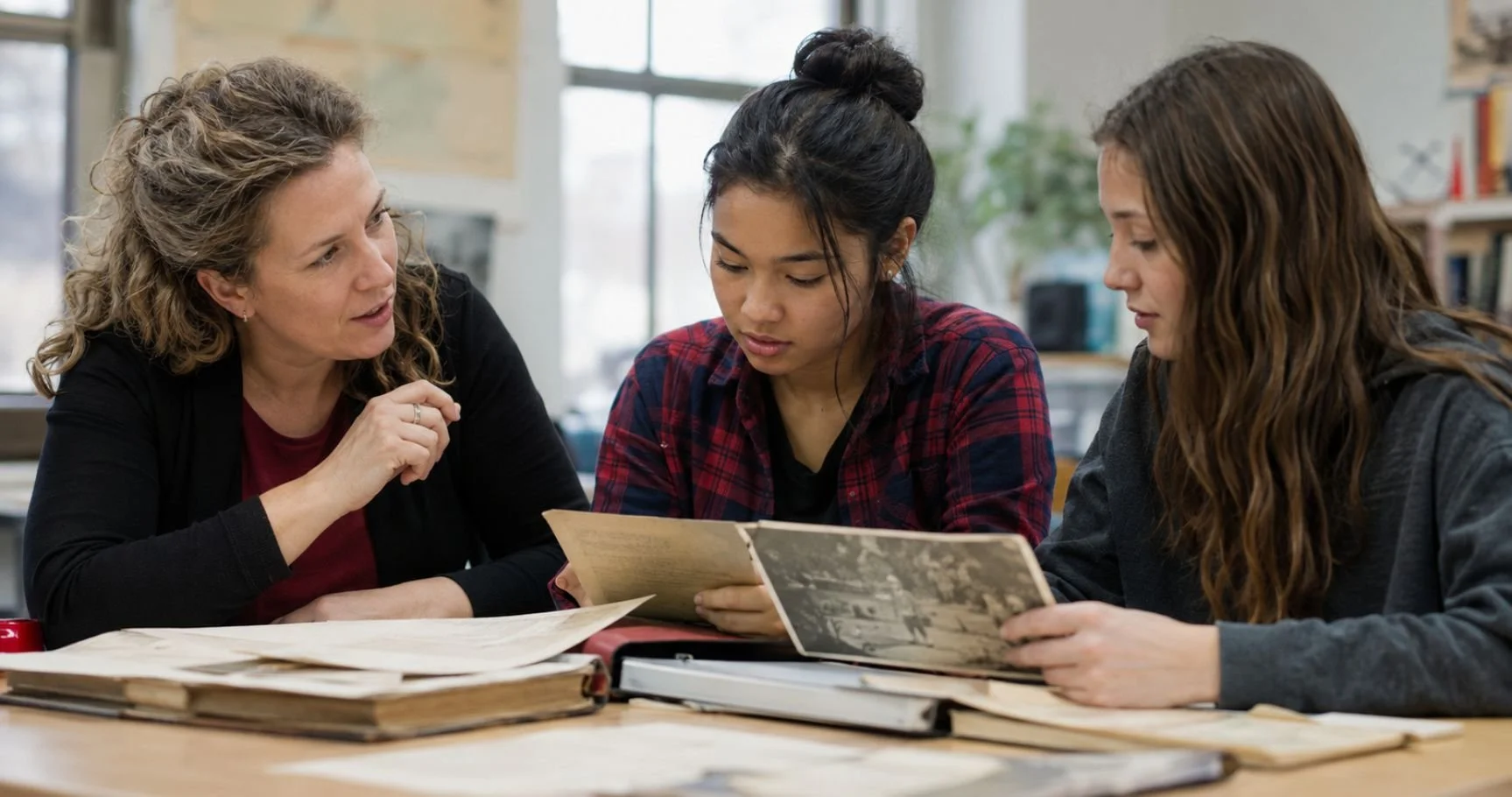
Every student becomes a detective
Every Faces to Names project follows a clear, structured process.
Discover
Students research a person named on a local memorial using structured Case Files, guided research tools, and trusted historical sources.
Connect
Students explore the individual's story, community connections, and tributes through evidence gathered from primary and secondary sources.
Share
Students create a comprehensive, evidence-based profile that brings the person's story to life, shares it with others, and preserves it for future generations.
Students submit their work for teacher review before community verification and publication.
![AI-generated illustration created using [ChatGPT (OpenAI]](https://images.squarespace-cdn.com/content/v1/69bbfbe2db037764bc41cdf0/c5044e23-c1e1-44cd-97c9-8606b72594c2/FTN-Imagery-Landscape-2-V2.png)
Every name is part of a larger community story
Every profile is one piece of a much larger picture.
As students research the people behind local memorials, they uncover connections to families, schools, workplaces, neighbourhoods, organizations, and places that help tell the story of a community.
Community Profiles bring together memorials, places, organizations, and remembrance traditions, helping students understand how remembrance is expressed, preserved, and passed from one generation to the next.
As new discoveries, profiles, and contributions are added over time, the record continues to grow, creating a lasting resource for students, families, researchers and future generations.
Everything you'll need to bring Faces to Names into your classroom.
What You’ll Receive
Clearly structured, fully supported, and available at no cost to participating classrooms.
Student Case Files
Structured research guides that help students gather evidence, organize findings, and build their profiles.
Curated Research Tools and Sources
Direct access to trusted Canadian and international records, archives, and remembrance resources.
Teacher Resources and Templates
Practical resources to support classroom implementation.
Community Profile Frameworks
Tools and templates that help classes document and connect the memorials, places, organizations, traditions, and stories that contribute to their community’s remembrance culture.
Platform Access
A secure, online workspace where students create, submit, review, and publish their research.
Teacher Review and Approval Workflow
Teachers remain in control of what is submitted for verification and publication.
Ongoing Support
Assistance with classroom setup, onboarding, and implementation throughout your project.
Getting Started is Simple
Getting started is simple. Request a demo, explore how Faces to Names could fit your classroom, and receive everything you need to get started.
1. Request a Demo
Learn how Faces to Names could fit your classroom.
2. Plan your Project
Identify a local memorial or remembrance project and prepare your classroom workspace.
3. Guide Student Research
Students investigate, connect, and share using structured tools and trusted sources.
4. Celebrate and Share
Student work contributes to remembrance in your community.
Free to participating classrooms. Ongoing support provided.
Frequently Asked Questions
-
Faces to Names aligns naturally with Grade 10 Canadian History in Ontario and equivalent secondary school history and social studies courses across Canada. It can also support independent inquiry projects, community service initiatives, homeschool learning, IB and interdisciplinary projects, and other opportunities that connect students with local history, remembrance, and community research.
-
Yes. While Faces to Names was designed for classroom use, the platform can also support homeschool learners, youth groups, museums, libraries, cadet corps, and community organizations interested in remembrance and local history. Contact us to discuss your project.
-
Yes. Faces to Names is designed to be flexible and adaptable. Teachers can scale the project to fit available class time while still providing students with a meaningful research and remembrance experience.
-
Getting started begins with a demonstration and a brief planning conversation. We’ll help identify a suitable memorial or remembrance project, set up your classroom workspace, and provide the materials and support needed to begin. Teachers are encouraged to provide names from a local memorial, if available.
-
Students access Faces to Names through a simple classroom login process. We help set up your classroom and provide guidance for student access.
-
We provide guidance with classroom setup, project planning, onboarding, and implementation. Whether you’re running Faces to Names for the first time or expanding into community projects, support is available throughout the process.
-
Every community has a story to tell.
Faces to Names can work with a wide range of local remembrance resources, including cenotaphs, memorials, honour rolls, books of remembrance, cemetery memorials, school memorials, church memorials, and other community records.
If no suitable memorial exists—or if names are not publicly recorded—Faces to Names can help students identify local service members and create a virtual memorial that preserves and shares their stories. The result is a lasting remembrance resource that can continue to grow as new research and discoveries are added over time.
-
Faces to Names combines classroom learning with community expertise. Student profiles are reviewed by the teacher and then verified by a community member with knowledge of local history before publication.
Teachers are encouraged to identify a local verifier, such as a historian, librarian, museum representative, archivist, or member of a local heritage organization. Faces to Names can provide guidance and support if needed. Community verification occurs after students have completed their work and does not delay classroom implementation.
Ready to Bring Remembrance to Life in Your Classroom?
Faces to Names provides everything needed to help students uncover the stories behind the names on local memorials, connect those stories to their communities, and create meaningful contributions that keep remembrance relevant for future generations.
Whether you’re exploring Faces to Names for a single class, a school-wide initiative, or a larger community project, we’d be happy to show you how it works.
Free to participating classrooms. Ongoing support provided.