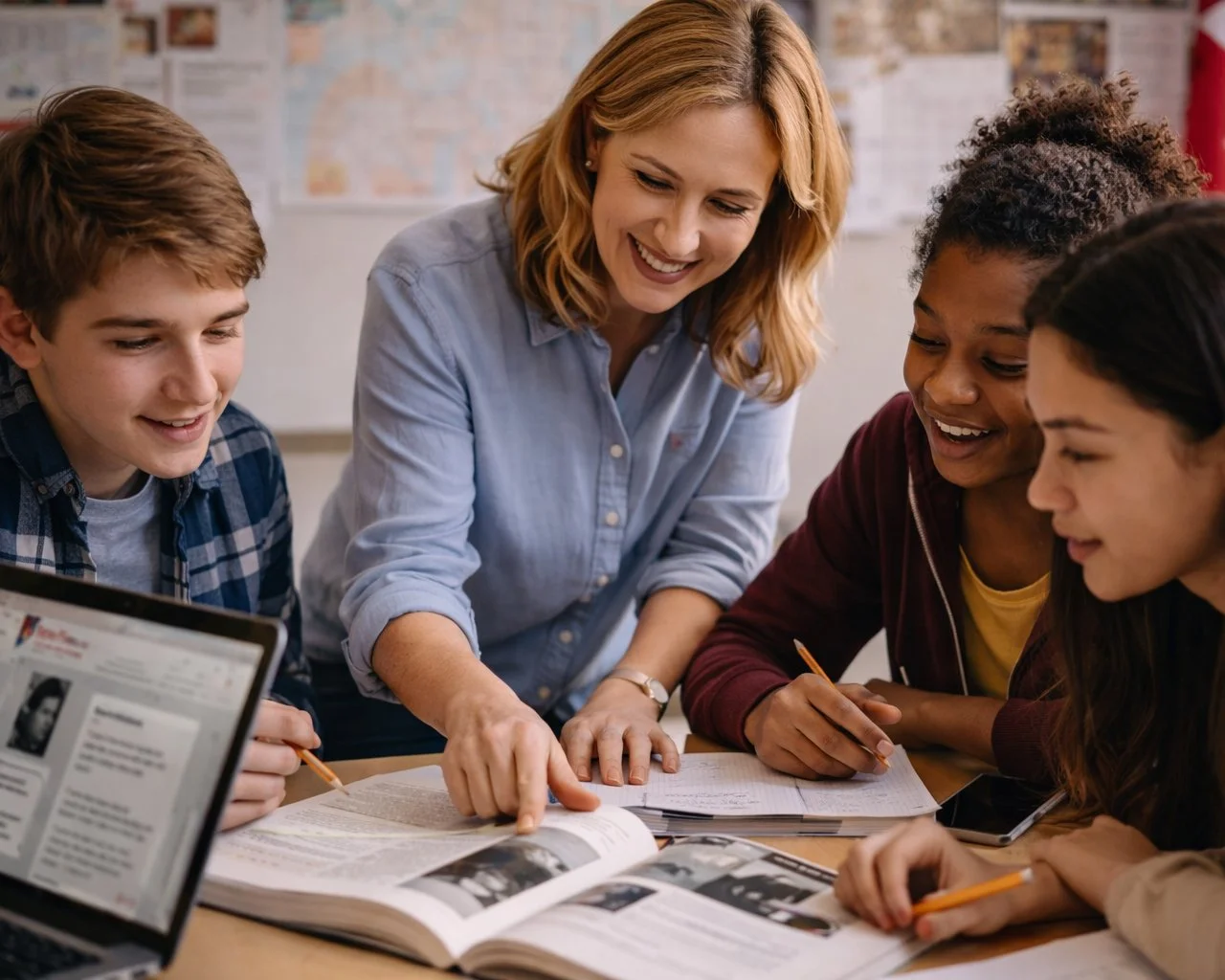
Bring Remembrance to Life in Your Classroom
A ready-to-use research project designed for Grade 10 Canadian history, adaptable across provinces/territories.
Free to participate.
Fully supported.
Why teachers choose
Faces to Names.
A meaningful way to bring history to life, without adding to your workload.
❋ Real historical research
Students work with primary and secondary sources including Library and Archives Canada, the Canadian Virtual War Memorial, and Commonwealth War Graves Commission.
❋ Curriculum-aligned
Faces to Names fits naturally into Canadian secondary school history and social studies units.
❋ Community connection
Individual research becomes a lens that helps students to understand the impact of war on their community and develop a more personal connection to that history.
❋ A meaningful, real-world contribution
Their work contributes directly to a growing, searchable national collection of profiles, giving it purpose beyond the classroom.
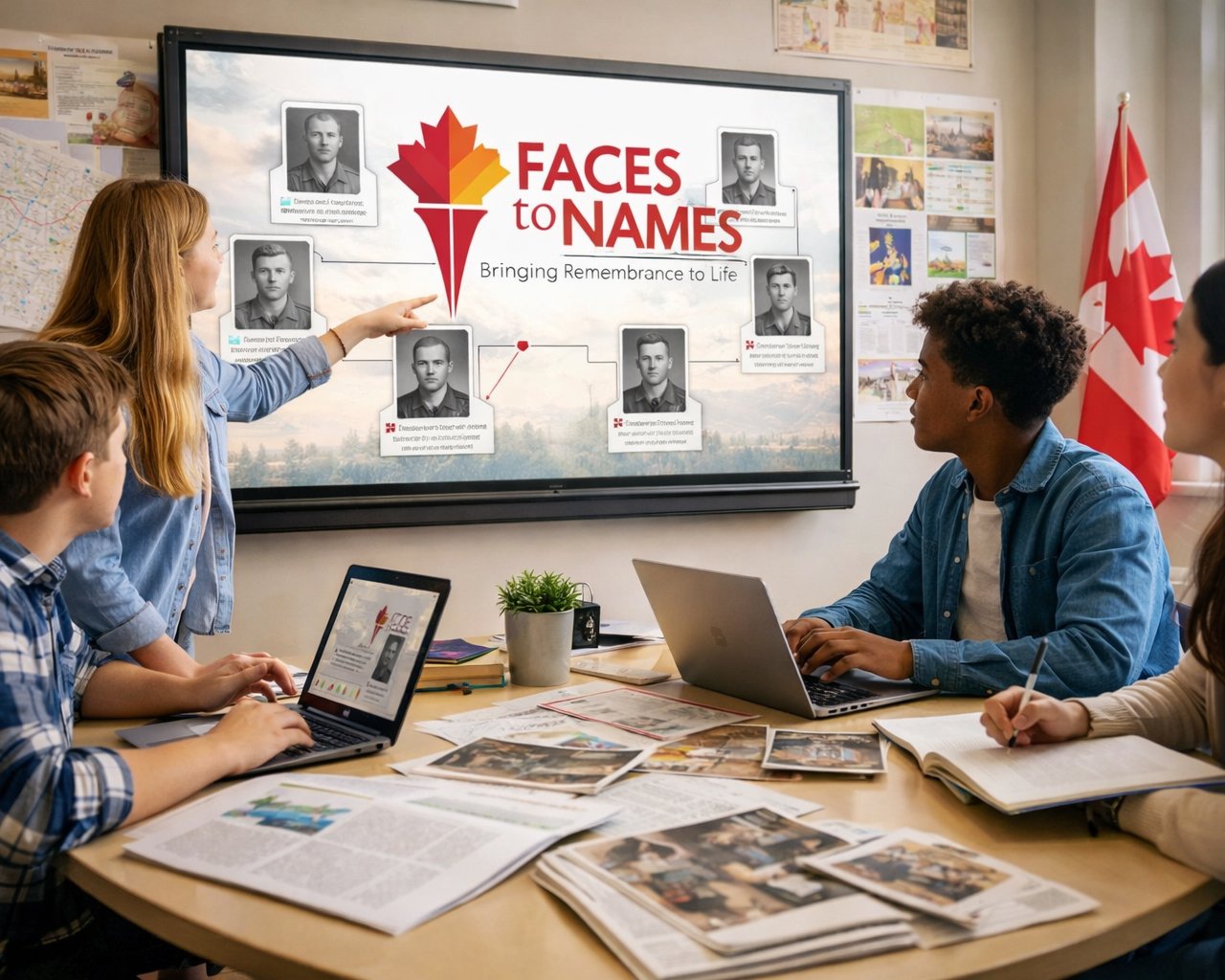
Built for Real Classrooms
Designed to fit within real classrooms, with flexibility for different teaching styles, schedules, and learning environments.
structured process
ready-to-use materials
cross-curricular
geographic mapping of personal and community connections
no course redesign required
AI-resistant
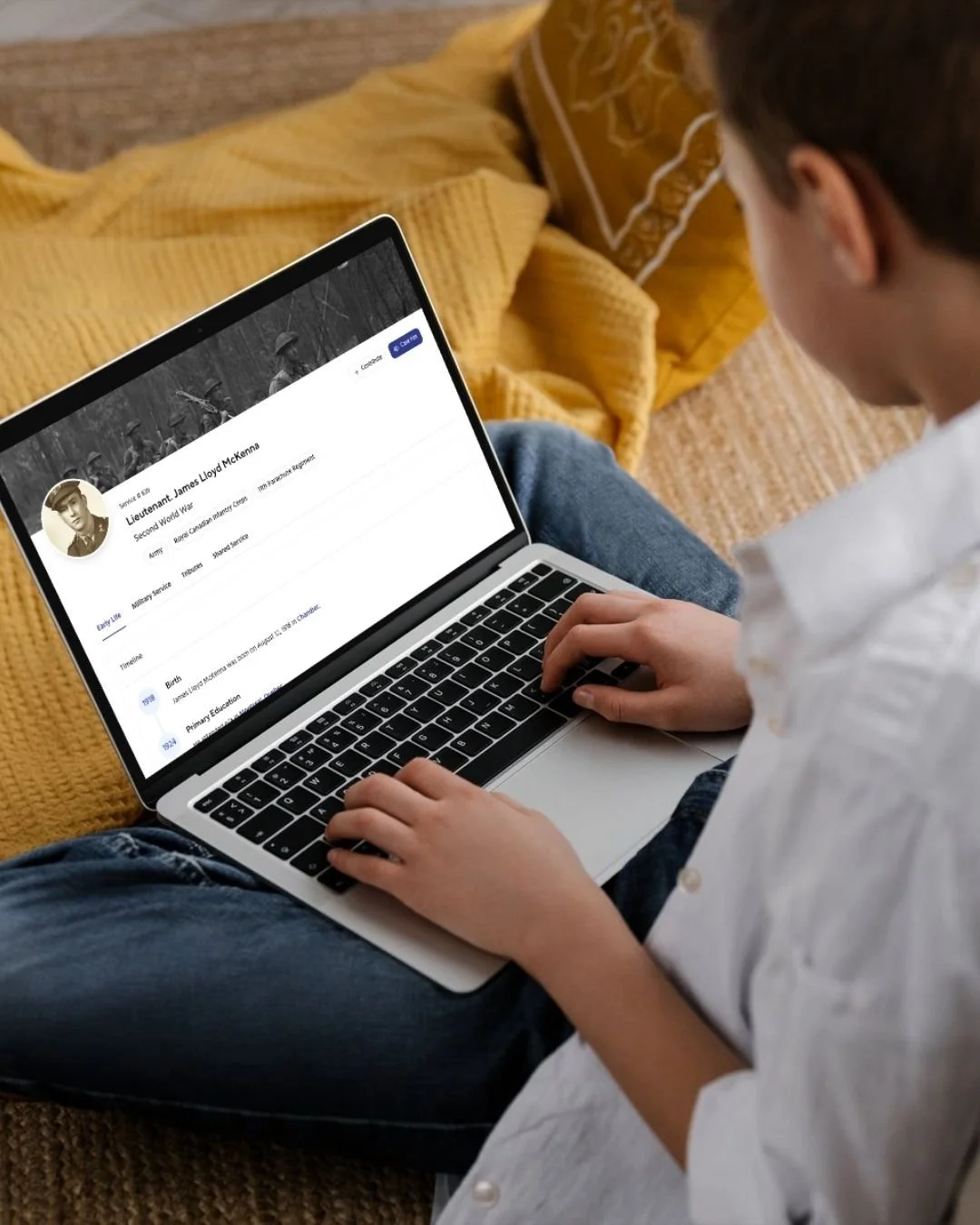
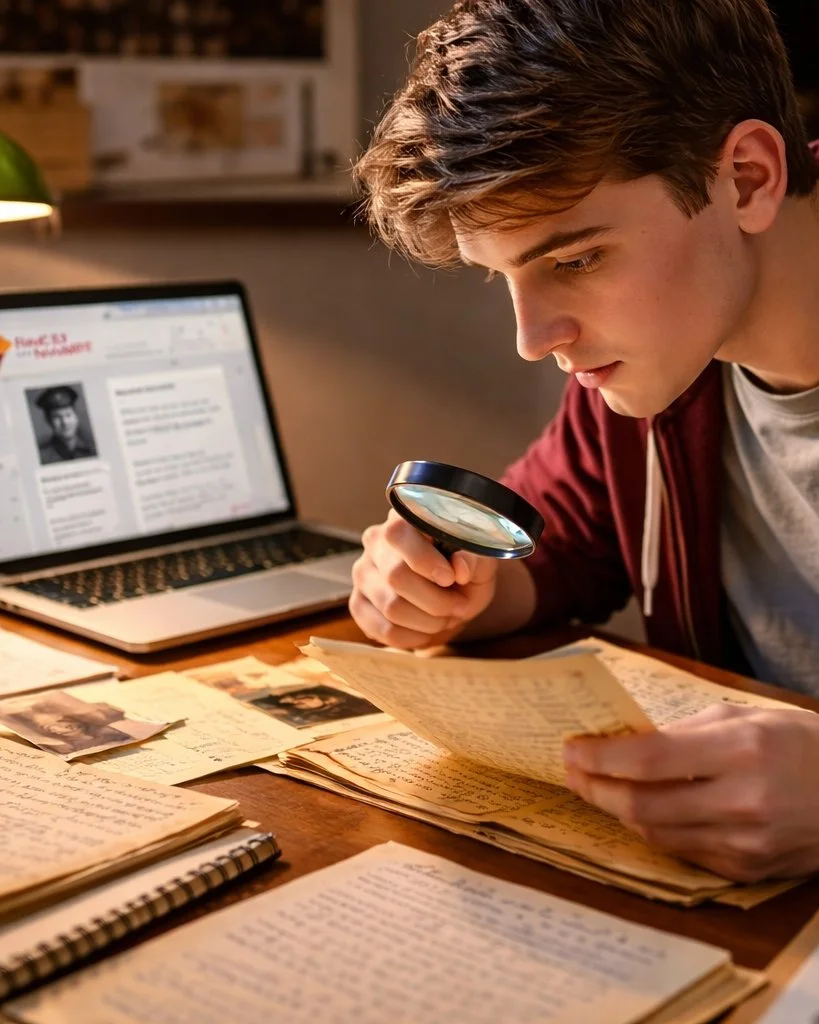
What the student experience looks like.
Every student becomes a detective. Every Faces to Names project follows a clear, structured process.
Step 1: Students are assigned a name from their local memorial and begin their research using structured guidance. They introduce the project at home, encouraging family engagement.
Step 2: They investigate the person's early life, service, community, and tributes using primary and secondary sources.
Step 3: They build a detailed evidence-based profile on the platform.
Students submit their work to you for review. It is then verified by a community member and published as part of a growing, searchable national collection.
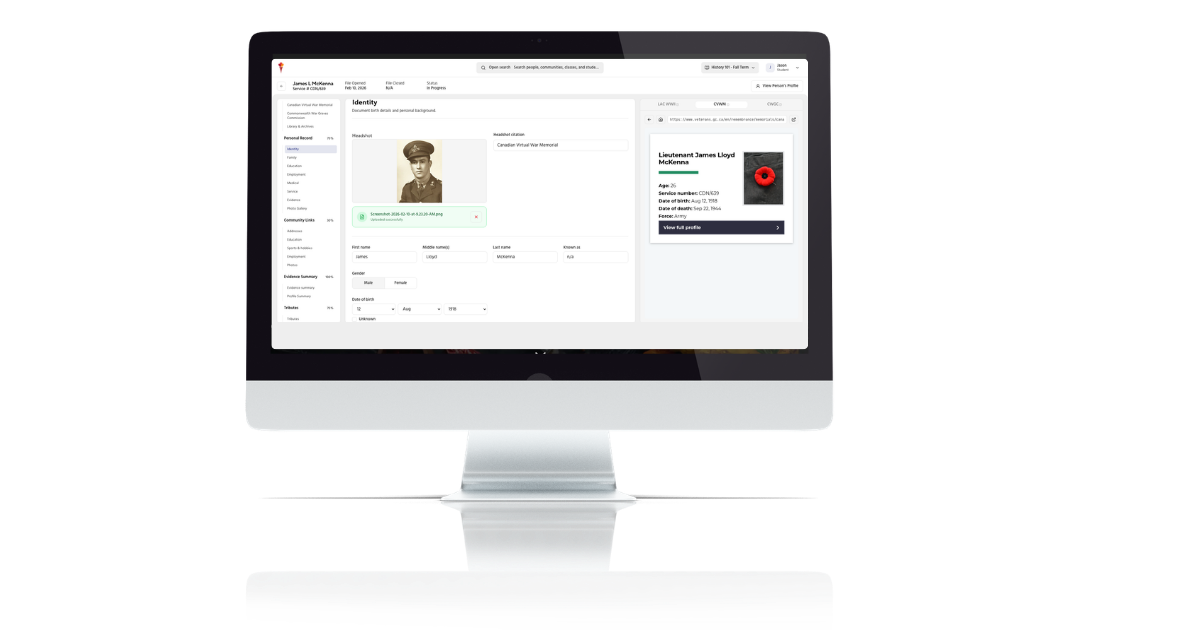
Extending the Learning
Faces to Names can extend beyond individual profiles.
Classes can build Community Profiles that connect individual stories to a shared local context, and continue expanding the work over time as new research and connections are discovered.
Students can also create supporting resources that contribute to research and provide additional context for profiles.
What You’ll Receive
Everything you’ll need to run Faces to Names in your classroom; clearly structured, fully supported, and ready to use.
Teacher guide and lesson slides to introduce and guide the project
Student Case Files that structure research and evidence collection
Curated research tools and templates aligned with trusted Canadian sources
Assessment rubrics to support consistent, efficient evaluation
Platform access designed for use alongside Google Classroom and other learning management systems
Ongoing support throughout your classroom experience
Join the Classroom Pilot
1. Request a demo or join the pilot. We’ll walk you through the platform and answer any questions.
2. Receive your classroom setup. We prepare your class space so you can assign names from your local memorial.
3. Access ready-to-use materials. Everything you need is provided: lesson plans, Case Files, and research tools.
4. Review and approve student submissions. Students submit their profiles for your review prior to community verification and publication.
Frequently Asked Questions
-
Typically 3-5 class periods, depending on how deeply you choose to explore the research.
-
Provide names from your local memorial (if available). We handle the classroom setup and provide all the materials.
-
Students access the project through a simple, guided login process compatible with platforms like Google Classroom and other learning management systems.
-
Students can research and create a virtual cenotaph or memorial, ensuring every classroom can participate.
-
Profiles are reviewed by the teacher and then verified by a community member (such as a local historian, librarian, or museum representative) before being published. Community verification may be completed by an individual or a small team, ensuring each profile is carefully reviewed before publication.
Teachers are encouraged to identify a local verifier. Faces to Names can provide guidance or support if needed. Community verification does not delay classroom use. Projects can be completed and approved by the teacher before verification is finalized.
Ready to bring Faces to Names to your classroom?
Faces to Names is free for registered classrooms across Canada. Log in to access the platform, explore the research process with your students, and start building your community's contribution to the national archive.
For registered classrooms participating in Faces to Names
Faces to Names directs students to, and builds upon, authoritative national and international sources used in historical research.

These organizations provide the records and source material used in student research.